
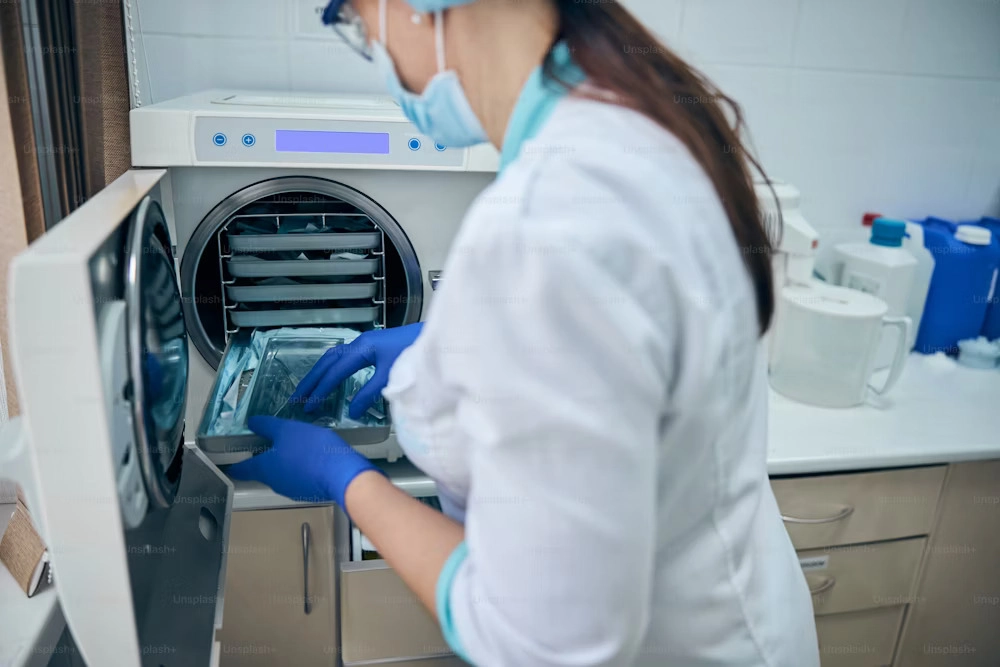
Let us go deeper into the significance of Hospital Sterilization Equipment and its impact on healthcare facilities.
Importance of Sterilization Equipment
In hospitals, effective sterilization is critical to preventing infection transmission. Hospital-acquired infections (HAIs) are a major concern, and sterilization equipment is crucial in minimizing their prevalence. Sterilization equipment contributes to the safety of both patients and healthcare staff by removing microorganisms from medical equipment.
Hospital sterilizing equipment not only protects patients but also extends the life and effectiveness of medical devices. Proper sterilization ensures that equipment works properly and lowers the danger of cross-contamination. It also helps hospitals meet regulatory norms and guidelines.
Types of Hospital Sterilization Equipment
Autoclaves: Autoclaves are commonly used in hospitals to sterilize a variety of medical items, such as surgical tools, dental equipment, and laboratory equipment. These devices employ high-pressure steam to eliminate bacteria, viruses, and other pathogens. Autoclaves come in a variety of sizes, from small desktop devices to massive industrial machines used in central sterile supply departments (CSSD).
Ethylene Oxide Gas Sterilizers: Ethylene Oxide Gas Sterilizers: Ethylene oxide (EO) gas sterilizers are widely utilized for heat-sensitive medical equipment that cannot survive autoclave temperatures. EO gas can permeate materials and kill bacteria, making it an effective sterilization treatment. These sterilizers are commonly used in hospitals for plastic medical devices, electronic equipment, and some sorts of implants.
Hydrogen Peroxide Vapor Sterilizers: Hydrogen Peroxide Vapor Sterilizers: Heat-sensitive devices can be sterilized using hydrogen peroxide vapor (HPV) rather than EO gas. These sterilizers kill germs by vaporizing hydrogen peroxide at a low temperature. HPV sterilization is a safe and effective approach that has grown in popularity among healthcare organizations because of its compatibility with a wide range of materials.
Ultraviolet (UV) Sterilizers: UV sterilizers use ultraviolet light to eliminate bacteria on surfaces. These devices are frequently used in hospitals to disinfect air, water, and surfaces. UV sterilization is chemical-free and efficient against a broad spectrum of diseases.
Common Sterilization Methods Used in Hospitals
Steam Sterilization: Steam sterilization, often known as moist heat sterilization, is one of the most widely utilized procedures in hospitals. It entails subjecting medical items to high-pressure steam at a specific temperature and pressure for a set time. Steam sterilization is good at killing bacteria and is appropriate for a wide range of materials.
Gas Sterilization: Heat-sensitive equipment that cannot be sanitized with steam is treated with gas sterilization procedures such as ethylene oxide and hydrogen peroxide vapor. These procedures require exposing the equipment to a gas that penetrates the materials and destroys germs. Gas sterilization is efficient against a wide spectrum of germs and is often employed in hospitals.
Chemical Sterilization: Chemical sterilization involves the use of liquid or gas chemicals to kill germs. These procedures are commonly employed with heat-sensitive sensors and materials. Chemical sterilization can be accomplished using a variety of procedures, including immersion in a sterilizing solution and exposure to sterilizing gases. The chemical sterilization method used is determined by the type of equipment and the level of sterilization required.
Factors to Consider When Choosing Sterilization Equipment
Sterilization Requirements: Sterilization regulations vary depending on the healthcare facility. Consider the types of tools and materials that must be sterilized, and select equipment that can fulfill those standards.
Capacity and Throughput: Determine the number of equipment that must be sterilized daily and select equipment with sufficient capacity and throughput to satisfy the demand.
Efficiency and Speed: In hospitals, time is often a vital issue, thus equipment with quick and efficient sterilization cycles can assist in simplifying processes and enhance workflow.
Ease of Use: Look for equipment that is user-friendly and easy to operate. Training staff on complex equipment can be time-consuming and may lead to errors if not properly understood.
Maintenance and Service: Look for equipment that is simple to use. Training employees on sophisticated equipment can be time-consuming and may result in blunders if not correctly understood.
Industry Regulations and Standards
To maintain patient safety and quality of treatment, hospital sterilizing equipment must comply with a variety of industry rules and standards. These regulations control the design, manufacture, testing, and operation of sterilizing equipment. Some of the important regulations and requirements are:
FDA Regulations: In the United States, the Food and Drug Administration (FDA) regulates hospital sterilizing equipment. The FDA establishes guidelines for the safety, efficacy, and labeling of medical devices, including sterilization equipment.
ISO Standards: The International Organization for Standardization (ISO) has created standards expressly for the sterilization of healthcare products. ISO 17665 and ISO 11135 are two essential standards that provide the requirements for steam and ethylene oxide sterilization, respectively.
AAMI Standards: The Association for the Advancement of Medical Instrumentation (AAMI) has issued various sterilization standards, including guidelines for steam sterilization, ethylene oxide sterilization, and healthcare quality management systems.
Benefits of Investing in High-Quality Hospital Sterilization Equipment
Investing in high-quality hospital sterilization equipment offers numerous benefits for healthcare facilities:
Improved Patient Safety: Using high-quality sterilization equipment provides effective sterilization, lowering the risk of hospital-acquired infections and increasing patient safety.
Compliance with Regulations: Investing in regulatory-compliant equipment allows healthcare institutions to comply with industry norms and requirements.
Improved Workflow: Efficient and user-friendly equipment streamlines workflow, allowing healthcare personnel to concentrate on patient care.
Cost Savings: High-quality equipment is built to last and dependable, avoiding the need for frequent repairs or replacements. This leads to long-term cost reductions for healthcare facilities.
Reputation and Trust: Investing in high-quality sterilization equipment displays a dedication to patient safety and quality of care, which enhances the healthcare facility’s reputation and trust.
Conclusion
Hospital Sterilization Equipment is crucial for ensuring a safe and infection-free environment in healthcare facilities. Healthcare facilities that invest in high-quality sterilization technology and adhere to best practices can assure effective sterilization, safeguard patients, and comply with industry rules.
Sterilization equipment, ranging from autoclaves to gas sterilizers, is available to satisfy the varying needs of healthcare facilities. When selecting equipment, take into account sterilization standards, capacity, efficiency, and convenience of use.
Compliance with industry norms and standards is critical when it comes to sterilization equipment. To guarantee that best practices are followed, become familiar with regulations such as FDA guidelines and ISO standards.
Investing in high-quality sterilization equipment has various advantages, such as increased patient safety, improved workflow, and long-term cost savings. Consider respected companies and manufacturers who have a track record of creating durable and effective equipment.
Effective sterilization is an important element of healthcare, and the correct sterilization equipment is essential in attaining this goal. Prioritizing patient safety and investing in high-quality equipment allows healthcare facilities to give the best possible care while minimizing the risk of infections.
We invite you to visit our website for further informative blogs, resources, and insights into the most recent advances in medical equipment and technology. Whether you need advice on sterilizing best practices or want to improve your facility’s equipment, we are here to assist you every step of the way.